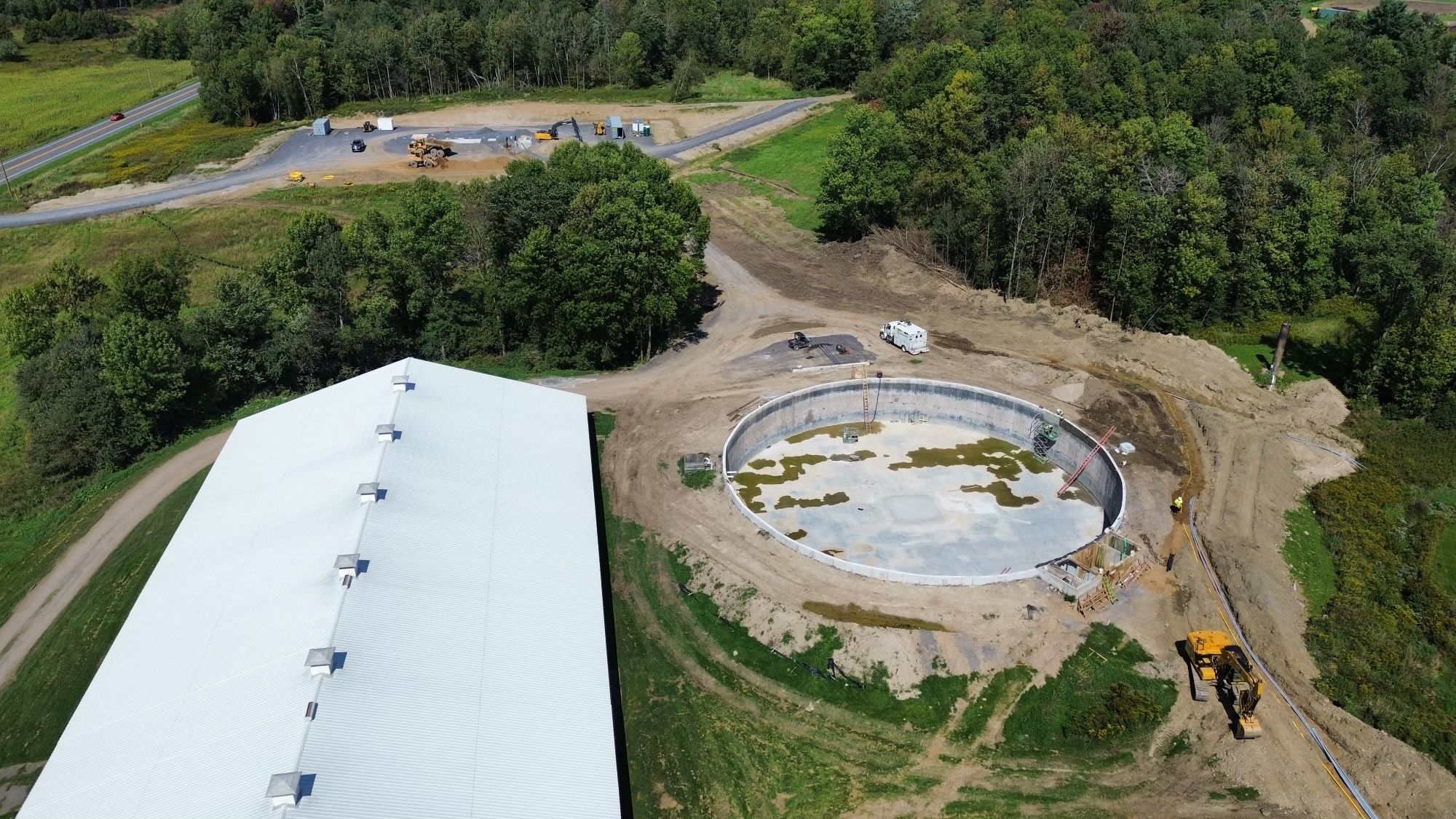
While wind and solar have dominated the renewable landscape, biogas offers unique benefits in addressing environmental concerns, particularly through its ability to repurpose waste into usable energy. The construction industry has a crucial role to play in the expansion of the biogas sector, developing the facilities and infrastructure that will enable this emerging renewable to thrive.
THE EXPANDING BIOGAS MARKET
Generated through the breakdown of organic waste materials like food scraps, manure and other organic matter, biogas offers both energy generation and methane gas reduction. The biogas market is experiencing significant growth, both internationally and in the United States, where policies and environmental concerns continue to fuel investments in sustainable energy.
Internationally, Europe has long been a leader in biogas, but the U.S. is catching up, driven by policies like food-waste bans and advances in technology. U.S. projects, including landfill gas and anaerobic digestion plants, are being developed to reduce greenhouse gas emissions and support a sustainable energy future.
Biogas harnesses methane from decomposing organic waste, converting it into less harmful carbon dioxide and water. This reduces methane’s impact, which is 80 times more harmful to the atmosphere than carbon dioxide on a 20-year time horizon. The raw materials abound—U.S. farms have a steady supply of organic waste, and food waste makes up about 40% of today’s landfill content.
Since the 1970s, landfill gas projects have generated electricity from methane or processed it for other uses. However, several factors now position renewable natural gas as a more compelling investment. Renewable natural gas projects harvest the gas produced by decaying organic matter and transport it for use in heating, generators or vehicles. Technological advancements, waste-management benefits and growing support for innovation have driven this shift. In fact, states like Vermont are already diverting food waste away from landfills and into processes like anaerobic digestion to reduce landfill material and capture methane for energy production.
If more states implement and enforce food-waste bans, landfill gas projects may become obsolete within 20 years. Plus, with improved curbside collection and the construction of more anaerobic digestion plants, biogas is expected to grow as a leading renewable energy source.
CONSTRUCTION OPPORTUNITIES WITHIN THE BIOGAS SECTOR
With biogas poised for growth, construction firms have a tremendous opportunity to support the industry’s expansion. Biogas facilities—from new builds to upgrades—offer a range of project opportunities and emerging trends suggest increased demand for specialized expertise in biogas infrastructure. Three key areas expected to see continued growth include agricultural waste facilities, food waste, anaerobic digestion plants and renewable natural gas production, which aligns with the push to reduce methane emissions.
According to the American Biogas Council, biogas-to-electricity projects are still dominant and account for 69% of existing biogas plants. However, of the $1.8 billion invested in renewable energy in 2023, 91% of new projects coming online were biogas-to-natural gas. For the construction industry, this presents new engineering and building opportunities including:
Biogas Digesters: Large-scale anaerobic digester tanks for organic waste
Gas Processing Facilities: Clean and upgrade biogas to pipeline quality, including gas conditioning, desulfurization and dehydration units
Pipeline Infrastructure: Transport RNG to existing gas grids
Injection Facilities: Connection points to the gas grid with specialized equipment and control systems
Feedstock Collection and Storage Systems: Gather organic waste from sources like farms, landfills and wastewater treatment plants and store it for biogas production
Site Development and Civil Works: Prepare construction sites, including grading, foundation work and utility installations
Construction firms that focus on developing adaptable, modular biogas facilities that can be transported and scaled for different projects, regions and industries will be well-positioned to leverage this growing market. This approach offers cost-effective solutions that simplify project complexity and timelines, enabling facilities to get online and generate revenue more quickly.
OVERCOMING CHALLENGES
Like any emerging industry, construction in the biogas sector faces several key challenges. Addressing these issues is critical to ensuring success and scalability in construction for the growing biogas market:
Site Evaluation: Careful preconstruction site analysis is essential, taking into account land use, environmental impact and grid connection feasibility. Selecting an optimal site can significantly influence project efficiency and costs.
Technical Expertise: Integrating specialized components in biogas projects requires in-depth technical knowledge, hands-on experience and a solid understanding of compliance with complex state and federal regulations. Expert partners, experienced project managers and skilled workers are critical for success.
Cost Concerns: Creating custom components with materials that can withstand corrosive gasses can add to project costs. Modular solutions that are adaptable and allow for easy integration create efficiencies in both time and expense.
To meet these challenges, construction companies must invest in technical expertise, adopt a cost-effective approach and actively engage with regulatory agencies to streamline approvals and support sector growth.
LOOKING AHEAD
The construction industry’s involvement in the biogas sector presents a significant growth opportunity, driven by increasing environmental regulations and the push for renewable energy. Advancements in anaerobic digestion technology are boosting gas-production efficiency, and there is a growing interest in offsite renewable natural gas production, making flexible distribution options more attractive.
Construction companies have a unique opportunity to impact the growing biogas industry by designing and building the required components and systems. By investing in technical expertise, adopting modular and scalable designs, and staying proactive with regulatory changes, construction teams can negate potential challenges and position themselves as leaders.
Biogas offers unique benefits, not only in renewable energy production but also in mitigating harmful methane emissions, making it a critical part of the clean-energy future. Companies that align with these evolving needs will not only support sustainability but also secure long-term success in an industry poised for sustained growth.
SEE ALSO: BEST PRACTICES FOR INTEGRATED SOLAR TECHNOLOGY IN COMMERCIAL CONSTRUCTION