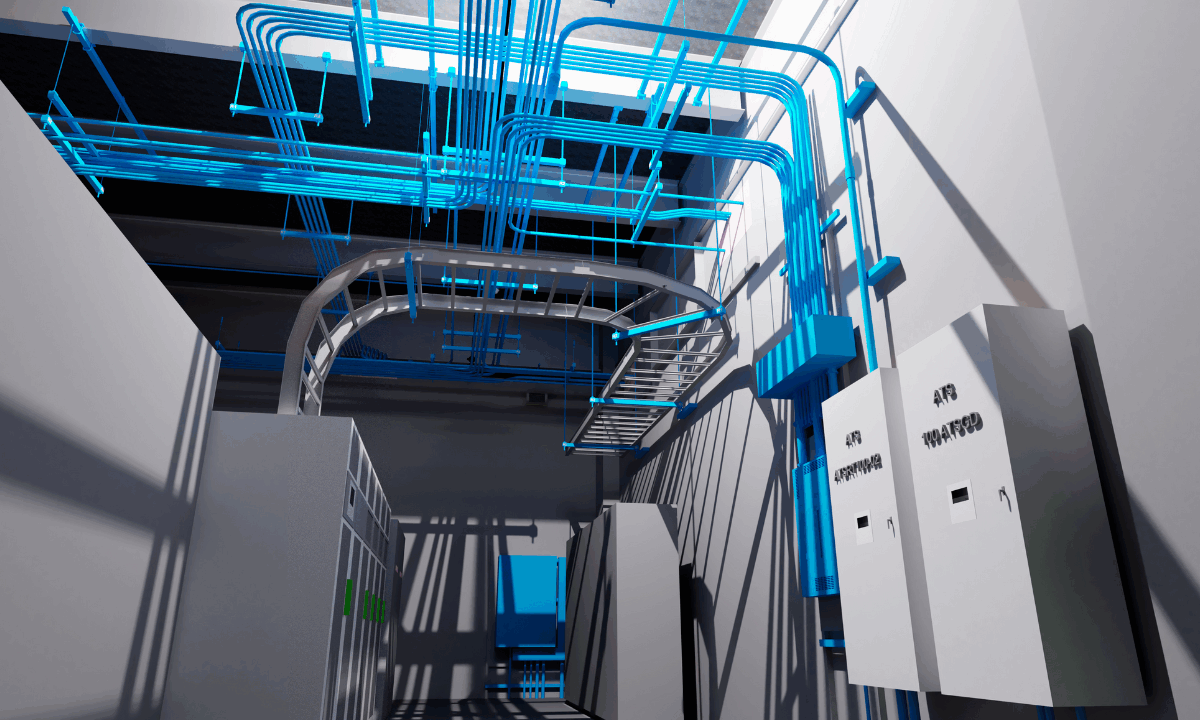
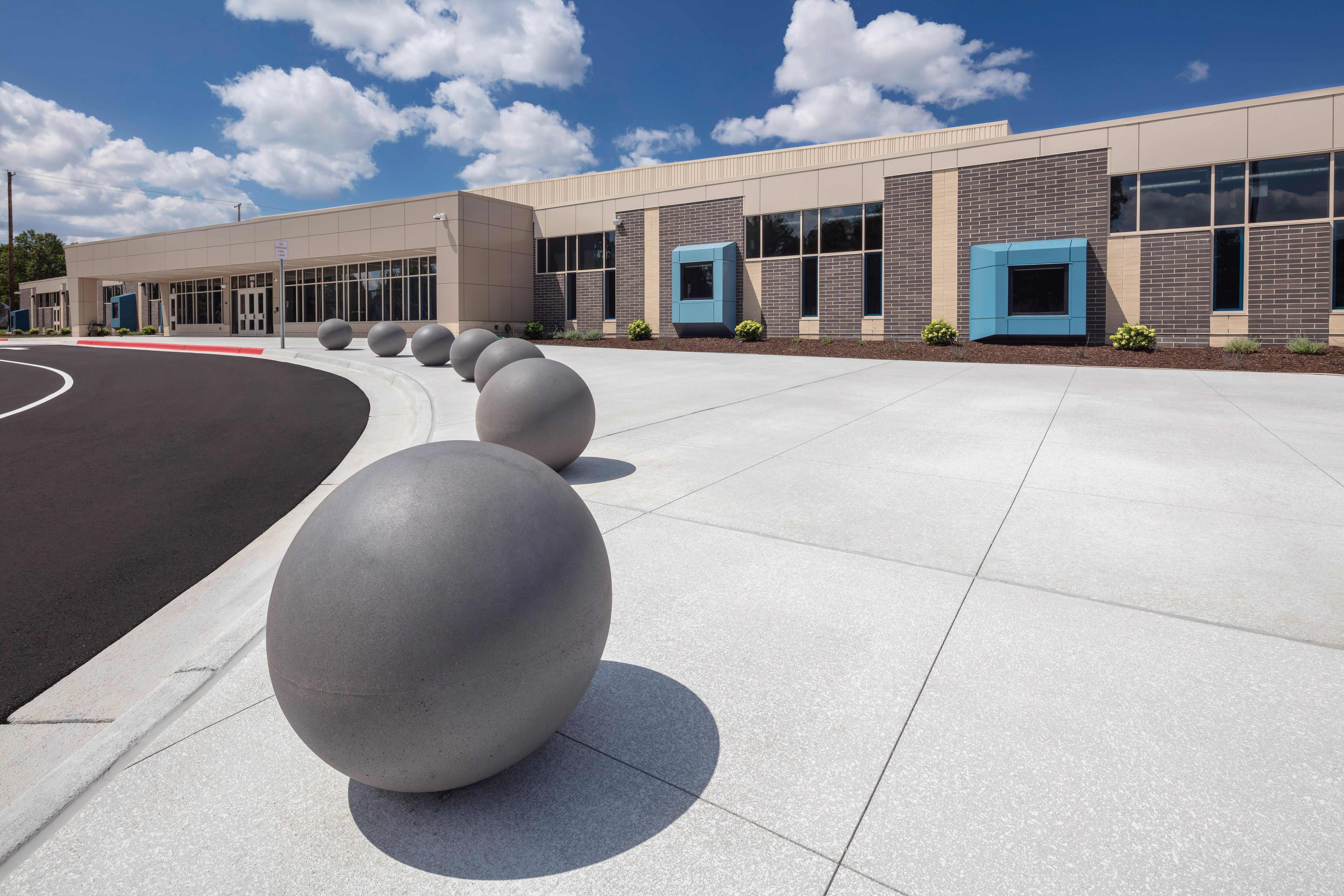
Inside a Lansing, Michigan, elementary school lives the first-ever AI-designed electrical system.
This may beg the questions: Why here? Why now?
Augmenta, the company that created the agentic AI technology used by C&R Electric at Mt. Hope Elementary School, sat down with Construction Executive to answer some of these questions and more on its latest venture with cutting-edge AI and what it could mean not only for your company but your community.
The Mt. Hope Elementary School project was approved in 2022 and the building opened its doors and its desks this August. This timeline was expedited with the help of Augmenta’s AI-designed electrical system—which facilitated 25% faster design, 15% less material waste, one month saved on prefabrication timelines as well as minimizing human error and thus rework.
Augmenta hopes that Mt. Hope Elementary School will stand as a major milestone for the future of sustainable, scalable urban development and a beacon of what AI can do for construction beyond the company.
What’s the news of the moment?
The completion of Mt. Hope Elementary School marks a historic moment for the construction industry; the delivery of the first building in the U.S. to be constructed with an AI-powered design automation platform. This project, a collaboration with general contractor The Christman Company and electrical contractor C&R Electric, serves as a powerful proof point for how Augmenta’s agentic design environment addresses the industry’s most pressing challenges: labor shortages, project complexity and exploding demand for critical infrastructure.
How long has this plan/technology been in the works?
The vision for this technology has been at play for a decade. It was born when co-founders Aaron Syzmanski and Francesco Iorio collaborated to pioneer the concept of Generative Design at Autodesk.
They saw firsthand how AI could revolutionize manufacturing and knew the next frontier was the more traditional construction industry. They started Augmenta to bring that vision to life, building the platform from the ground up with contractors to address the inefficiencies that have plagued construction for decades.
It has been commercially available since early 2025, with real-world deployments across diverse project types, from healthcare facilities to data centers.
Why use AI for this part of this project?
For the Mt. Hope Project, Augmenta’s platform was used to design the electrical raceway within the school. Electrical routing represents one of construction’s most complex coordination challenges, involving thousands of nuanced decisions, code compliance requirements and tight spatial constraints as contractors race against the clock to compete for space with other systems like plumbing and HVAC.
AI was the ideal solution because it can consider and deal with near-infinite requirements and combinations, and simultaneously design with material efficiency, installation time, clash avoidance and constructability in mind—a challenge that overwhelms traditional design approaches and is beyond the scope of conventional tools.
How did it help keep projects on schedule and budget?
The Augmenta Construction Platform delivered noteworthy time savings for the Mt. Hope Elementary project. There was a 25% reduction in overall design time for the electrical system, saving more than 100 hours in the design phase alone. For C&R Electric, the prefabrication-ready drawing time was cut down by a full month. This efficiency gain directly translated to project predictability, keeping the overall schedule on track and on budget by avoiding costly on-site rework.
How did it benefit electrical contractors?
The technology acts as a force multiplier for BIM/VDC teams, enabling teams to rapidly value-engineer projects and evaluate multiple design scenarios simultaneously. As Kyle Sponseller, president of C&R Electric, stated, the platform helped his team achieve “remarkable time savings” and allowed them to get prefabrication-ready drawings a month sooner. It effectively augmented their small team, giving them the power to rapidly produce solutions and solve complex coordination issues.
How does this milestone make designers feel? Are they worried or excited about the prospect of AI facilitating the design process?
Experienced designers recognize this as essential evolution for an industry under unprecedented pressure and are excited about its potential. AI isn’t replacing human designers; it’s a trusted partner that handles the tedious, repetitive tasks. This frees up their time to focus on strategic, creative problem-solving and ensures every design is coordinated and optimized from the start, augmenting a workforce that is already stretched thin.

How is this portion of the project holding up today?
Mt Hope was completed on schedule in August 2025, and is now working flawlessly. C&R sees this project as a success and now plans to apply [this AI strategy] to every project going forward.
The industry is at a critical juncture, with explosive demand and pressure to address climate change and labor shortages. How does this type of AI platform address these global challenges beyond a single project?
The construction industry is grappling with a massive labor shortage and fragmented, manual processes that don’t scale to meet explosive demand for new buildings. At the same time, it is a massive and often overlooked contributor to global warming, responsible for consuming 40% of global energy and 30% of the world’s resources. AI addresses these challenges by automating the design process—the platform solves for labor shortages by enabling small teams to do an outsized amount of work. This systematic approach is the only way to meet global demand for housing and infrastructure while driving progress on climate goals.
How did it encourage/achieve sustainability goals?
The traditional design process often leads to significant material waste—on average 30% for every project. With AI-driven designs, the Mt. Hope project achieved a 15% reduction in material waste by optimizing the routes for thousands of feet of conduit. This is a tangible example of the company’s commitment to making buildings inherently more sustainable and reducing the industry’s environmental footprint.
Do you plan to use this process on other projects going forward? Other parts of projects beyond electrical?
The success at Mt. Hope Elementary showcased the power of AI in electrical design, but Augmenta’s vision is much broader. The company is actively evolving its platform to support a wide range of projects and building types, from critical facilities like data centers and hospitals to warehouses, commercial buildings, and new infrastructure.
The platform’s goal is to be a partner in all major building systems. The future roadmap includes delivering a new generation of AI-native design tools that fully automate the design of mechanical, electrical, plumbing and structural systems.
SEE ALSO: IS AI STILL MISSING FROM YOUR CONSTRUCTION COMPANY’S TOOLBOX?