In addition to a surge of work on correctional facilities, the industry faces the dual challenge for courthouses and other justice centers to serve not only as public facilities, but also as symbolic architectural works. Besides their practical necessities, these structures send a message of “authority with justice” to all who enter them.
The legacy of courthouses as a hallmark of fine architecture within an established and well-governed society is being preserved as new facilities are built with the latest technology and old ones are restored.
In a 2016 guide, “Creating a User-Friendly Court Structure and Environment,” commissioned by the National Association for Court Management, the authors pay particular attention to the role of the courthouse building and how its presence allows “structure to convey experience.” Courthouse architecture provides an infrastructure that is not just physical and real, but a metaphor for the rule of law that proceeds within it.
Builders and other stakeholders are strategically partnering to not only provide contemporary services and technology to aging courthouse infrastructure, but also to preserve the historical significance, venerable charm and iconic presence that a court facility maintains in its community.
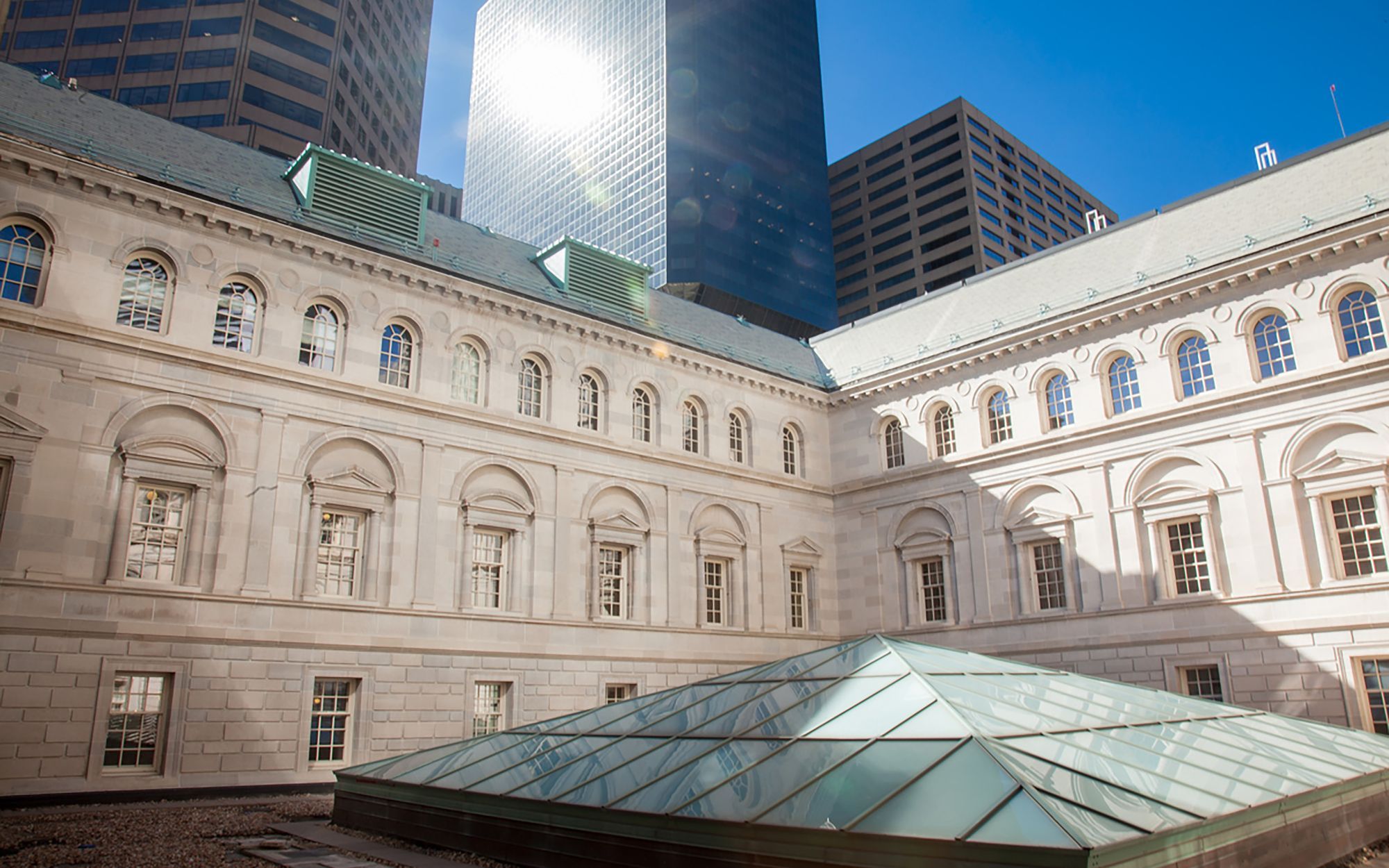
A good example of this is the recent restoration of the Byron White U.S. Courthouse in Denver. Originally constructed between 1910 and 1916, the striking neoclassical building takes up an entire city block in the federal district of downtown Denver, making it among the most widely recognized assets in the region.
Nearly 100 years after its original construction, Milender White, Arvada, Colorado, was awarded a General Services Administration contract to rehabilitate and upgrade the 270,000-square-foot building, which includes four floors, an attic space beneath a pitched roof, a full basement and a sub-basement level for mechanical equipment.
Named after Supreme Court Justice Byron White, a native of Fort Collins, Colorado, the landmark courthouse was dulled by a century of wear and tear. Details had worn away. Historic marble needed restoration. Fragile, hand-carved stones required careful replacement to match existing carvings.
Milender White’s scope of work encompassed improvements throughout the building, including courtrooms and judges’ chambers. In addition to the historic window, masonry, stone and terrazzo floor restoration, mechanical and fire protection systems were upgraded, roof access stairs and platform were replaced, elevators were modernized and historic light fixtures were upgraded.
Restoration also included exterior repair and replacement of the historic Colorado Yule marble (the same material used for the exterior of the Lincoln Memorial and the Tomb of the Unknown Soldier in Washington, D.C., and Arlington, Virginia, respectively), crack repairs, tuck-pointing and structural stabilization. A whopping 455 of the courthouse’s 100-year-old wood windows required restoration; that project alone took more than a year to complete.
With the building fully occupied during construction, all work had to be closely coordinated and sequenced to prevent any interruption of U.S. Tenth Circuit Court or marshal activities. Construction was suspended while appellate courts were in session—approximately five weeks of the year.
Milender White received an ABC Excellence in Construction® Award for its highly skilled masonry, terrazzo flooring and window restoration plus fire safety and security modernization work on this historical icon.