Musculoskeletal disorders are some of the most stubborn drivers of lost time and compensation costs on American jobsites. Overexertion, awkward postures and repetitive overhead movements are part of the daily routines of mechanical, electrical and plumbing rough-in, interiors, steel, concrete and envelope trades. Exoskeletons, passive braces or powered frames that offload the spine and shoulders have evolved to reduce biomechanical load, extend worker stamina and lower the mental stress that accumulates when every move hurts.
What Counts as a Construction Exoskeleton?
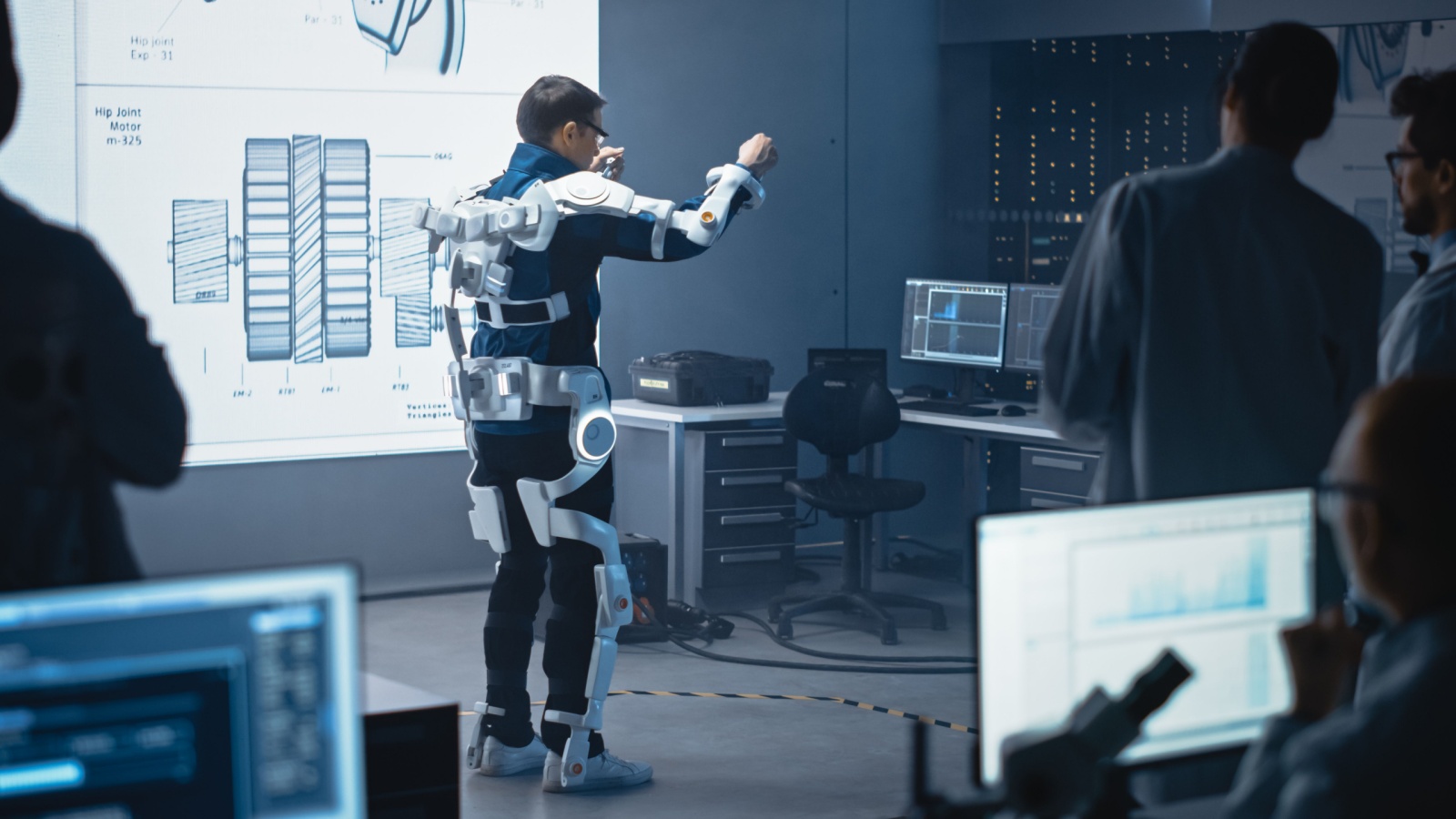
Jobsites typically see three types of exoskeletons—back or trunk support for carrying and sustained forward flexion; shoulder and arm support for overhead drilling, fastening and panel installation; and lower and limb support for prolonged stopping or sit-stand assistance.
Passive systems use springs or elastomers, while powered units add motors and batteries. The goal isn’t to create super workers but to keep crews inside safer ergonomic envelopes, so they finish the week with energy left.
NIOSH’s Center for Occupational Robotics Research highlights exoskeletons as a promising control for construction-related musculoskeletal risks, while stressing the need for task-specific evaluation and safe use. The global exoskeletal market was valued at $498.33 million in 2024 and is forecast to reach $1.25 billion by 2030—expanding at a 16.27% compound annual growth rate. The health care, military and industrial sectors are the top users of this technology.
Where Are Exoskeletons Being Used on Jobsites?
After pilot schemes on large infrastructure jobs, contractors identified the trades that gain the most from mechanical assistance. In each case, repetitive high-load or awkward postures are the common thread.
Devices are only viable when the same motion repeats for minutes rather than seconds—setup time still matters. Typical uses include:
- Steel fixers tying rebar at floor level for hours
- Formwork carpenters assembling shutters at shoulder height
- Scaffolding crew carrying ledgers, transoms and standards
- Roofers and cladders lifting insulation boards up pitched surfaces
- Pipefitters and plumbers installing heavy flanged pipework in plant rooms
In 2024, a construction materials supplier partnered with Stanley to develop a suit that can help support workers carrying heavy loads. After a two-week trial, the designers found that the Hapo Back exoskeleton reduced back strain by 30% and had the potential to lower load on the back by as much as five tons per day. Users of various ages—ranging from 20 to 60—reported feeling immediate relief while wearing the technology.
Why Specialist Contractors Matter
Rolling out wearable robotics involves more than issuing hard hats—battery charging and inspection processes affect program risk. Specialists must be able to balance solving complex issues that arise in their projects while maintaining the correct and safest operations of the exoskeleton. This should be in addition to mandatory training for safety and site management across all construction activities.
Early adopters report that pairing ergonomics with safety representatives during task analysis helps match the right suit to the job—maximizing benefit and minimizing encumbrance.
U.S. contractors are investing in exoskeletons because regulatory guidance and industry data point in the same direction. OSHA’s ergonomics materials name the very exposures common to nonresidential work—lifting, overhead reaching, pushing and pulling, awkward posing and repetition—as primary musculoskeletal disorder drivers.
BLS injury and illness data also show that construction remains a higher-rate sector for nonfatal injuries. On the business side, large insurer analyses attribute tens of billions of dollars annually to serious injuries, with overexertion and bodily reaction among the top cost drivers. These signals provide executives with a clear reason to pilot exoskeletons as part of a layered ergonomics strategy.
How Exoskeletons Reduce Strain and Mental Load
Construction is a high-pressure job where emotional resilience gets praise even when harmful. Those who work in this sector are vulnerable to mental health issues due to the demanding environment and often transient way of life—the culture of stoicism also keeps them from seeking help. A roofing company’s CEO even warns that a “no-complaint mentality” encourages crews to work past exhaustion, fueling dissatisfaction and departures.
Industrywide data highlight the stakes. Research shows that untreated mental illness among workers cost the American economy $477.5 billion in 2024. By eliminating the physical drivers of exhaustion, exoskeletons provide operatives with the capacity and permission to pace themselves. Musculoskeletal disorders drain energy, interrupt sleep and erode focus—all prime conditions for mistakes onsite. Exoskeletons offer significant potential to improve worker safety, reduce injury and enhance productivity.
Designing a Safe and Worker-Centered Exoskeleton Program
Think of exoskeletons as an engineered control that must fit your people and your work. Start with sizing and donning. A poor fit raises pressure points and can alter movement patterns in ways that increase risk. A trade-specific sizing matrix, a quick fit check and a set of swap kits make it easy to find the right match.
Also address balance and mobility. Some shoulder-assist designs shift the center of mass, while hip constraints can affect gain on ladders or uneven decks. Test usage by running a short obstacle course familiarization session before the first field use. Heat, hygiene and comfort should be primary concerns.
Above all, keep usage voluntary and worker-centered. If the device feels like a productivity whip, it will sit unused. However, if it’s framed as a wellness option with permission to stop and swap, acceptance will rise and so will the benefits.
Key Takeaways for U.S. Contractors
Exoskeletons will not fix poor planning or bad material flow. However, as part of a layered ergonomics strategy, they can meaningfully reduce physical strain and give crews permission to self-pace without sacrificing throughput. Start with the riskiest tasks, measure what matters, consider worker choice and deliver training through platforms your field already uses. When done well, you move culture from “work through the pain” to sustainable performance.
SEE ALSO: THE MOST POWERFUL CONSTRUCTION TECHNOLOGY IN THE WORLD