What is the most impactful invention created in the last 50 years? It isn’t the internet or blockchain. It doesn’t have anything to with cloning humans or landing space rockets on floating ocean platforms.
In construction, a lot is said about how machine learning and artificial intelligence will change the industry, but it’s hard to imagine exactly how. After all, contractors and the machines they use are much more tangible.
Contractors like to hold things with their hands and see things in action. But do not forget that computers are also machines and their ability to detect trends and patterns is as useful on a jobsite as a crane is. So how machine learning work and why should contractors care about it.
The most impactful invention of this new Information Age is the algorithm. Algorithms have overthrown governments, connected people in remote places of the world and created wealth in the process. Today, nearly every major function goes through some algorithm—from financial transactions to cat pictures. While this system has made lives easier in many ways, it’s also created a lot of complexity.
But on its face, an algorithm is not actually terribly complex. At its core, an algorithm is a set of instructions that tells a computer what to do. They rely on logic and IF and THEN statements. These instructions are written for computers, which are electronic machines with billions of transistors that store bits of information and are turned on and off billions of times per second, depending on the instructions given to them. With each key stroke on a phone or computer, billions of these tiny transistors are working to create the letters and images that appear on the screen, and it’s being done at lighting speed. None of this would be possible without a set of instructions—or an algorithm—to tell the computer how to do it.
As the amount of data generated today has increased, so too has the complexity of these algorithms. It is common to see programs that rely on more complex operations—such as an airline’s booking platform or the NSA’s terrorism database—have millions of lines of code. As more organizations digitize their operations, and as more companies ask more from their systems, writing the code for every task and at scale has become an incredibly intensive task.
To solve for this, programmers asked a clever question: what if instead of trying to write code by telling the computer what do, what if they wrote algorithms that showed it what to do. In other words, if programmers designed algorithms that could turn around and write algorithms, they could scale the complexity and abilities of their operations exponentially. For example, if a programmer wanted to write the most efficient recipe for baking a cake (i.e., “how can I achieve the best cake in terms of taste and texture, while also using the fewest amount of ingredients and doing it in the shortest amount of time?”) he or she would have to explain in explicit detail in the algorithm how to achieve this. And if the programmer is not a professional baker or even an amateur cook, this program would have a high chance of failure.
But what if instead of writing this program on his own, this programmer wrote an algorithm that showed a computer millions of versions of cake recipes and let the machine detect patterns and derive at the optimal balance of flour, butter and chocolate? In practice, this means that a programmer could write a program with 100 lines of code, feed cake recipes into this algorithm and then watch it grow as this learning algorithm goes to work building a much more complex, much more comprehensive algorithm with millions of lines code and at a fraction of the speed than the team could.
This is the magic of machine learning; writing algorithms that write other algorithms. At its most basic, this is what machine learning does. Today, this idea feels at best like magic and at its worst the end of the human race. These self-writing algorithms may sound like the early days of a total robot take-over. AI-alarmists ask “what happens when one of the algorithms designs an algorithm that we don’t understand, that we can’t control, and that does things we didn’t intend for it to do?”, but as of today most of these learning algorithms are being applied in more practical ways.
As this technique is currently applied in the real world, it generally begins by creating labels for the different data types (in this case, butter, sugar, ounces), and then allowing the algorithm to match the data types across different recipe versions. Designing algorithms like this (i.e., statistically rather than deterministically), unlocks the power of pattern recognition and neural networks that would be otherwise unnoticeable to the human eye.
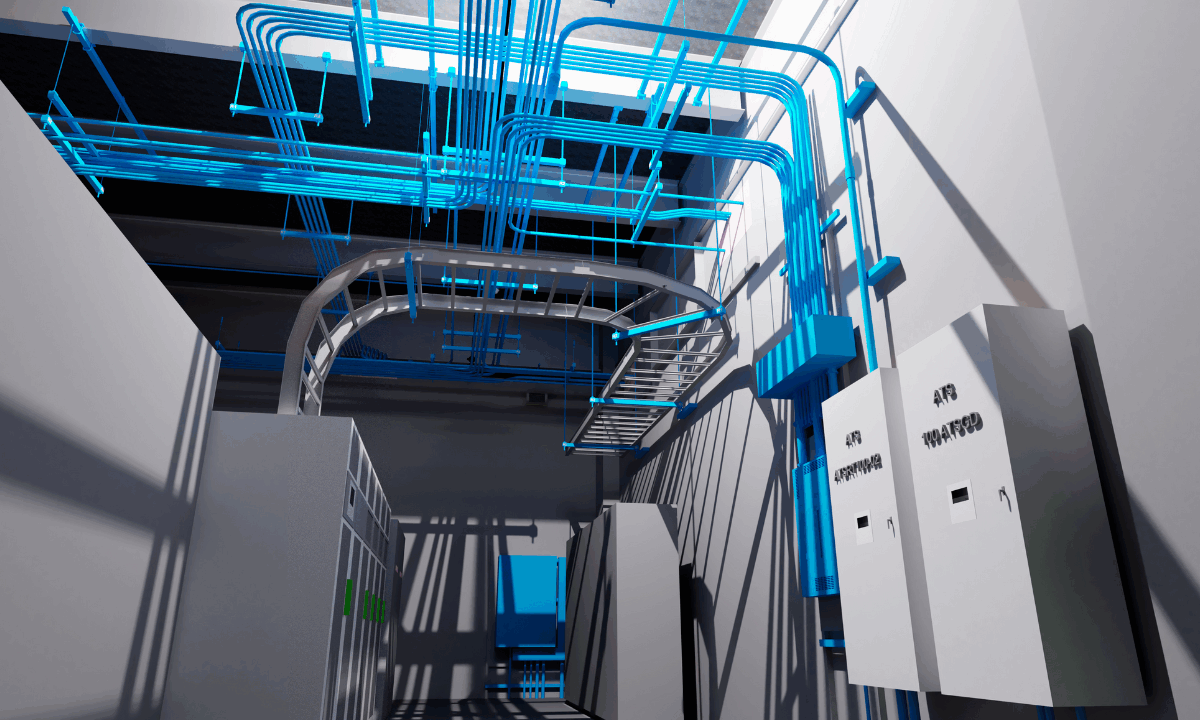
Construction can generate confusion, which can result in costly and otherwise avoidable reconstruction. New developments to building image modeling allow contractors to foresee design errors as well as overlay plans for electrical systems and plumbing in the sites they are building.
In their simplest form, new technologies save time typically spent on menial or time-consuming tasks. And in construction, as is the case everywhere, time is money. Data analytics software can track actual construction rates and compares them to projected rates, which of course translates to a better rate of project completion and a higher return on investment. A recent Harvard Business Review makes the advantages clear: companies utilizing data-driven technology have already seen a 5% increase in productivity and a 6% increase in profit.
The continued development of Big Data and AI technologies promises to bring more innovation to construction and many other sectors in the not-so distant future. In the meantime, early adopters of such technologies are already noticing the competitive advantage they have suddenly gained. In an era where global construction forecasts include projects bigger than any historically undertaken, and in a global economy full of uncertainty, these new technologies help to minimize the uncertainty present in the process of construction itself and boost what contractors, even those with limited resources or manpower, are capable of doing.