The emergence of a global pandemic has forced business owners to assume more responsibility for the health and safety of employees, visitors, and customers in a large variety of offices, stores and other facilities. This is a business challenge as well as a human challenge. Business leaders not only want to keep occupants healthy for the sake of compassion, but also to protect the productivity of their employees. It may feel like many things are outside of a business owner’s control but the addition of humidification is an instrumental step toward providing healthy indoor air.
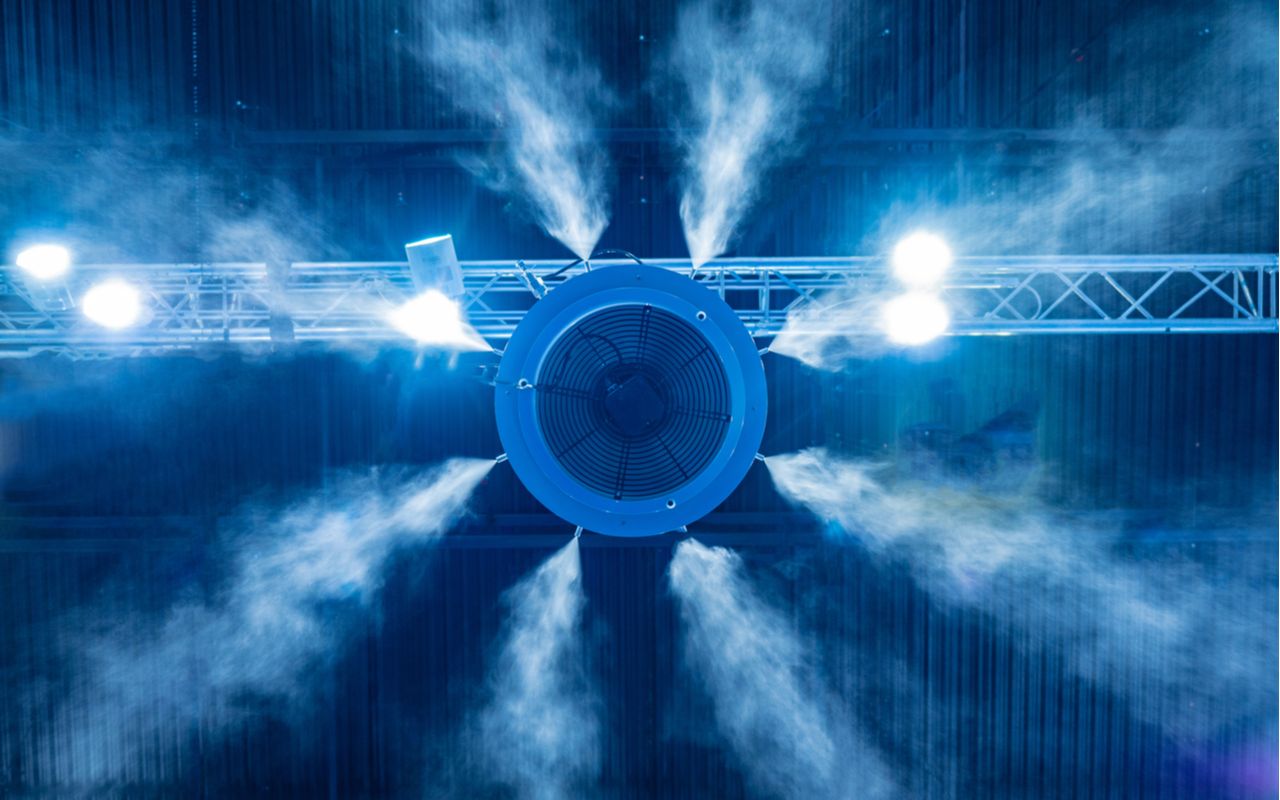
The addition of a commercial humidification system will ensure safe, hands-free, broad protection for building occupants against airborne viruses, such as COVID-19 and the seasonal flu, while also reducing the spread of bacteria, the proliferation of allergens and other occupant discomforts caused by dry air.
Keeping the relative humidity levels between 40% and 60% RH reduces the transmission of viruses in particular because the moisture that humidity adds to a viral particle acts as a weight that causes the particle to fall out of the air. The problem with respiratory illnesses like COVID-19 and the seasonal flu is that they are spread via airborne particles and they will float in the air longer in dry indoor environments. The addition of humidity to make these airborne particles larger works well with the typical methods of wiping and sanitizing work surfaces; in addition, a larger particle is more likely to be removed by existing filtration.
Air quality also affects how a person feels in a given space. Most employees or visitors have a comfort level they are accustomed to and when the air is dry, it can feel very uncomfortable. Optimal humidity levels provide the required moisture to reduce dry eyes, dry skin, bloody noses and static shock. This comfort “feeling” also tends to lead to better productivity of employees and that affects the bottom line.
The first step to ensuring that the relative humidity is at a healthy level in a building is to take RH readings with a hygrometer to quickly determine if a facility is optimizing its defense against COVID-19. A target of 45% RH is generally recognized as providing positive benefits while being easily achieved. If you are seeing lower RH levels then check equipment to see if it is operating and adjust/raise setpoint if required. It is also important to review current space configuration and use, if anything has changed, since commissioning it may be necessary to review options for additional capacity/output.
For buildings that did not originally have humidification equipment and need to be retrofitted, supplementary humidification systems can be quickly installed on a wall and start adding moisture to rooms right away. Larger humidification systems can be incorporated into a facility’s HVAC system, in the mechanical room or on the roof, and can keep an entire building humidified.
While there is a short-term, day-to-day “set it and forget it” benefit to a commercial humidification system, there is also a long-term “get it and keep it” benefit, as the system can last for up to 20 years. And with health benefits beyond COVID-19, that long-term benefit delivers a valuable return on investment year after year after year. Hopefully we’ll see an eventual end to the pandemic. When we do, the humidification system will still be providing healthy indoor air quality while continuing to protect against other illnesses.