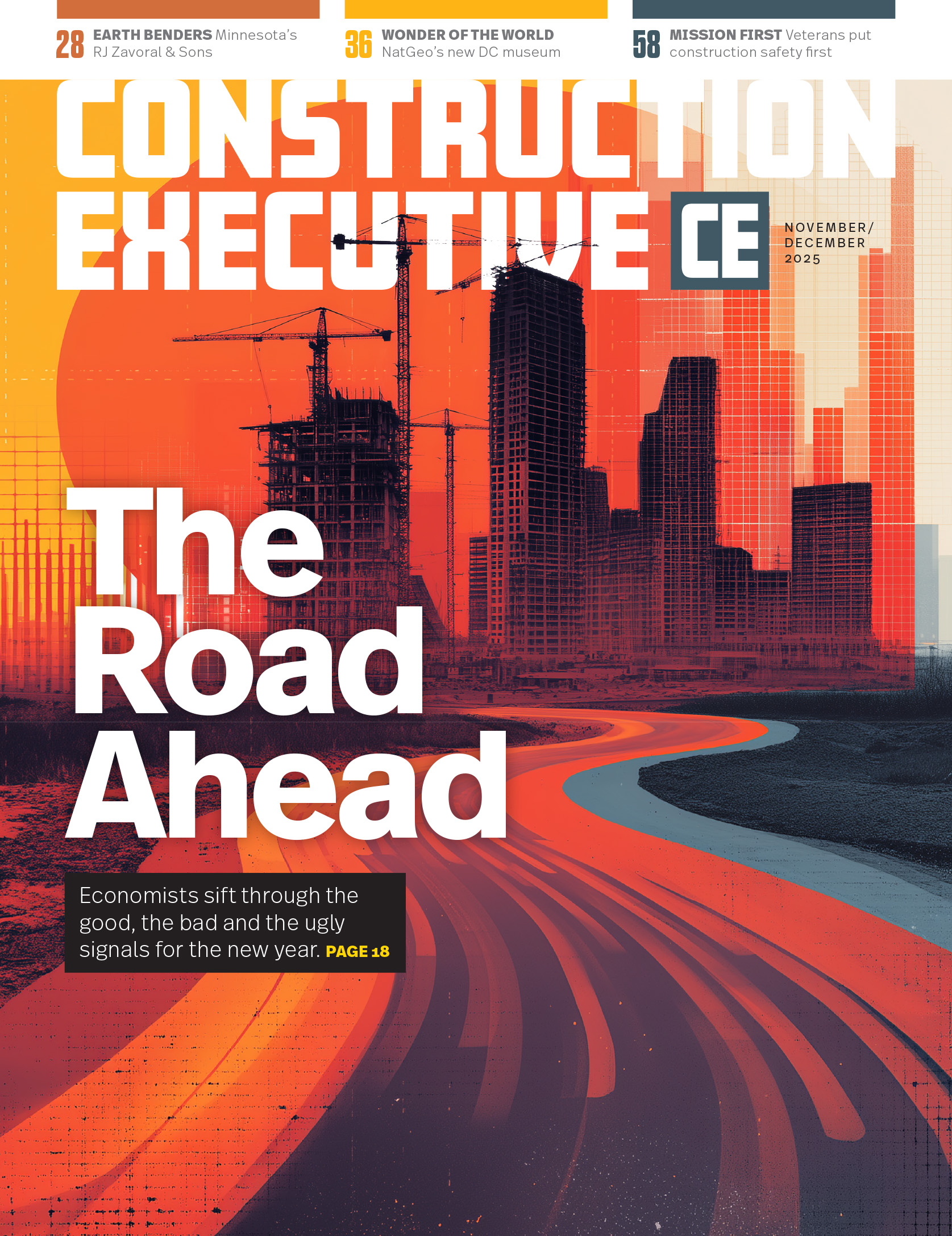
2024 will be remembered for many things. One on hand: strong consumer spending and stock performance; low unemployment; rate cuts; an artificial intelligence craze; the election. On the other: high house prices and mortgage rates; stagnant wages; labor shortages. Both the positives and negatives tell stories about the health of the U.S. economy, and both will have a huge impact on small businesses in 2025 and for years to come.
The key question for small businesses in the construction sector is how the economy will change in 2025 and, more specifically, how the political and economic changes that have been promised by the new administration will impact inflation, interest rates, unemployment, taxes and tariffs. Will these changes be a net positive for small business owners?
INFLATION
The Federal Reserve has calmed inflation without spurring a recession, a feat many experts deemed unlikely when inflation peaked at 9% in June of 2022. Unemployment remained low throughout the tightening cycle, and wage growth is helping consumer purchasing power catch up to prices which, today, are rising more slowly. The Federal Reserve switched to a loosening bias in the fall of 2024 and has indicated its intention to continue loosening so long as the economy does not grow too fast and inflation remains low. Inflation now sits at 2.7% and is expected to drift lower throughout 2025, barring a major policy intervention or significant changes to Fed policy.
The current shortage of affordable housing in the U.S. should be a catalyst for construction industry growth in 2025. However, some are concerned that interest rates will remain high throughout the year as the Fed is forced to scale back anticipated rate cuts due to inflation.
While many of the new administration’s proposals appear to be starting points in a negotiation rather than settled policy, if certain new policies were to be enacted in their proposed form—specifically tariffs—the U.S. economy would almost certainly experience another inflation shock. The business community, fresh on the heels of the last inflation shock, will be watching these policy changes closely and are prepared to act quickly should inflation return.
THE GLOBAL SUPPLY CHAIN
The global supply chain today is functioning better than it was several years ago during and immediately following the pandemic. However, critical issues continue to challenge small businesses sourcing materials and selling overseas. During 2024, persistent disruptions in the global supply chain stemming from wars, pirating, strikes, infrastructure failures and inclement weather combined to disrupt the global flow of trade. Now, the threat of significant tariffs on large U.S. trading partners is forcing wholesalers, retailers, manufacturers and many other business owners to reexamine their supply chains and develop sourcing strategies that reduce the cost of tariffs while still ensuring the timely delivery of goods.
Small businesses in the construction sector have learned from previous disruptions the benefits of shorter supply chains and greater onshore production. These benefits are amplified by the proposal of potential tariffs. As a result, small construction businesses can expect to see continued growth in domestic manufacturing and the integration of new technologies that promote automated production. While the growth in U.S. manufacturing and automation should yield net positives for the U.S. economy, there is potential for the pace of this change to be highly disruptive to the global supply chain if changes are not implemented in a gradual and deliberate manner.
THE POLITICAL ENVIRONMENT
The Trump Administration assumed office in January, proposing measures for lower taxes, less regulation, smaller government, higher tariffs on imported goods and tighter immigration standards. Lower taxes and less regulation will clearly be embraced by the business community while additional tariffs would raise the cost of building materials significantly, especially tariffs on Canada (lumber), Mexico (appliances) and China (iron and steel). The long-term effects of the other initiatives will be revealed with time. What is clear is that business owners will be watching these developments closely as they will impact inflation, the cost of capital, the cost of goods sourced overseas and overall economic demand.
Although 2025 presents considerable economic uncertainty, the economy is poised for continued growth so long as inflation remains low. While considerable change is expected on the political front, the economy is at the forefront of the public’s mind. Market-friendly policies are expected to prevail, which would make now a good time for business owners to be working on a growth plan, while also having contingency plans in place should inflation return within the foreseeable future. This means determining what financing a business is likely to need in either scenario. While many banks have scaled back their exposure to businesses credits, there are many non-bank, small-business lenders that are ready to fill the funding gap left when banks began to tighten. As the political uncertainty wanes and a clear view of the economy unfolds, 2025 is emerging as a prosperous and exciting year for small construction business owners, a critical growth engine of the American economy.
SEE ALSO: SMALL BUSINESS DOS AND DON’TS FOR CONSTRUCTION EXECUTIVES