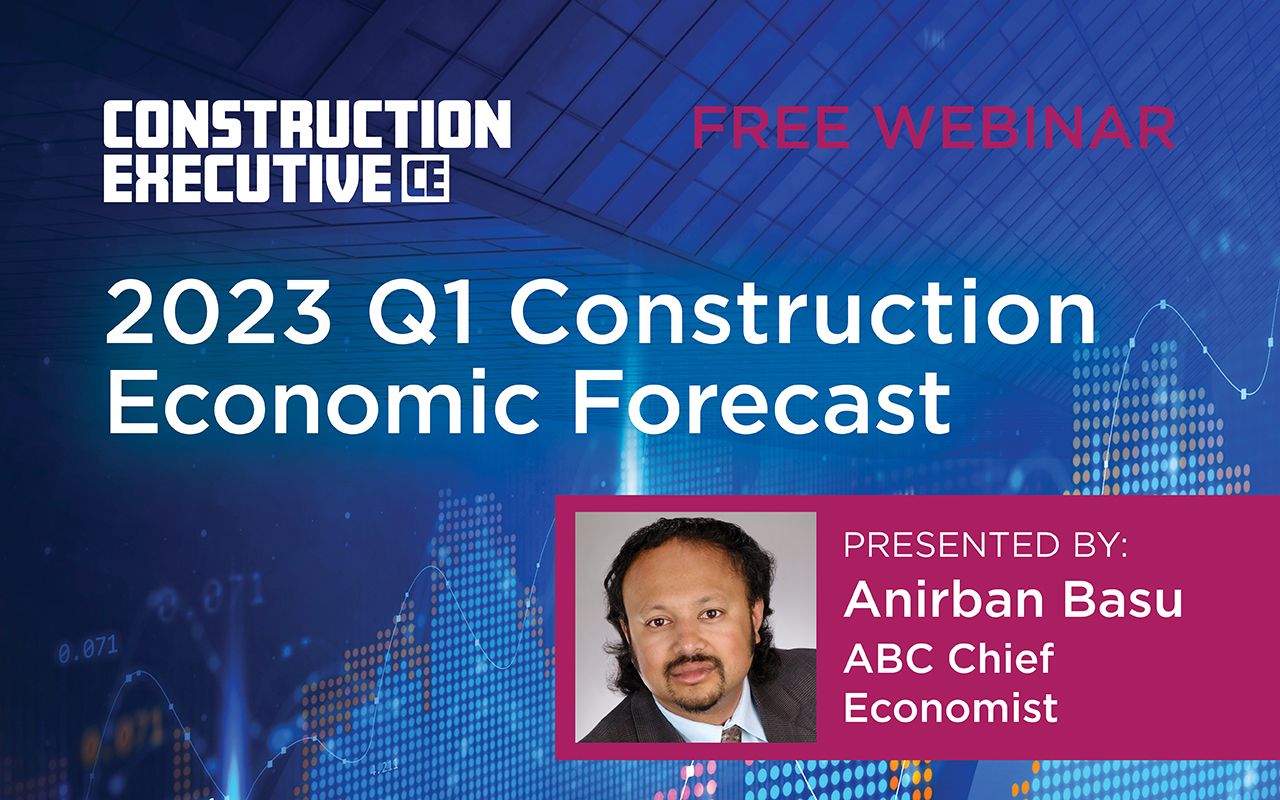
Construction Executive presented its “2023 Q1 Construction Economic Update and Forecast” webinar with Associated Builders and Contractors Chief Economist Anirban Basu on April 5. The program was sponsored by GCPay, Motive, Nationwide and Unanet.
Basu began by noting that this is a central-bank-driven economy, as the Federal Reserve has raised the federal funds rate, from 0.25% to 5%, over the course of more than a year to combat inflation. Even with the frequency of rate increases, Basu believes the economy is still overheated although slowing, noting: “The war on inflation is being fought, it has not yet been won, and there are more battles ahead.”
“The Federal Reserve is fighting inflation in a weakening economy,” Basu said. “You can’t hire people aggressively in a low-unemployment-rate environment without triggering wage inflation.” Basu said that inflation remains stubbornly high and that the Fed is taking the mandate to fight inflation seriously, even if it has side effects.
Basu added that construction has picked up 310,000 jobs since prior to the pandemic, although many are unskilled labor. He hinted that this may be the result of lower hiring standards as contractors remain desperate to fill positions, with hopes of upskilling the best workers.
Citing a recent PwC survey of U.S. executives, Basu said that many firms are or are planning to downsize in the coming months. While layoff announcements are becoming increasingly common—large layoffs have been seen mostly in consumer spaces and big tech firms—the unemployment rate has remained low and people being laid off are generally able to find new jobs quickly.
Basu said that there’s a lot of evidence of a slowing economy, including in the construction industry. The single-family-housing market is in recession, with home prices decreasing sharply in January 2023 following a 60% drop in mortgage applications in the last year. Sellers are being forced to reduce their asking prices to attract buyers due to higher mortgage rates. Single-family residential building permits have also been falling, while multifamily permits are trending upward slightly.
For commercial construction, the picture remains murky. The Architecture Billing Index has shrunk steadily since September 2022, while the ABC Construction Backlog Indicator remains healthy. Manufacturing, commercial and infrastructure spending remains strong, while public safety spending has fallen off from its pandemic highs, and the office, lodging and recreation sectors have yet to bounce back. The Construction Producer Prices Index is also vastly different from a year ago, with softwood lumber, steel and various energy products falling drastically from their highs a year ago, but with concrete products up 14% and nonferrous wire, plumbing, asphalt and prefabricated structural metal products all on the rise.
While some economists are revising their forecasts, Basu noted that his hasn’t changed. He remains convinced that the warning signs are there and some are “screaming recession”—including the U.S. Census Bureau’s business inventories report showing excess retail inventory and the U.S. Treasury yields curve flip.
Basu suggested that, while some contractors remain confident, “you can’t handle the truth—I think recession is coming.” There is “fraying at the edges” of both the U.S. and global economies. He predicted that recession conditions will prevail at some point over the next 12 months, but that large parts of the construction industry, such as public construction, multifamily housing and grocery stores, will hold up due to overwhelming demand.
The full recording and slides from this presentation can be accessed here.
The webinar included live polls from the audience, with questions on profit margins, the status backlogs and the leading challenges firms face. The results from these polls are below, compared with polls from previous forecast webinars.