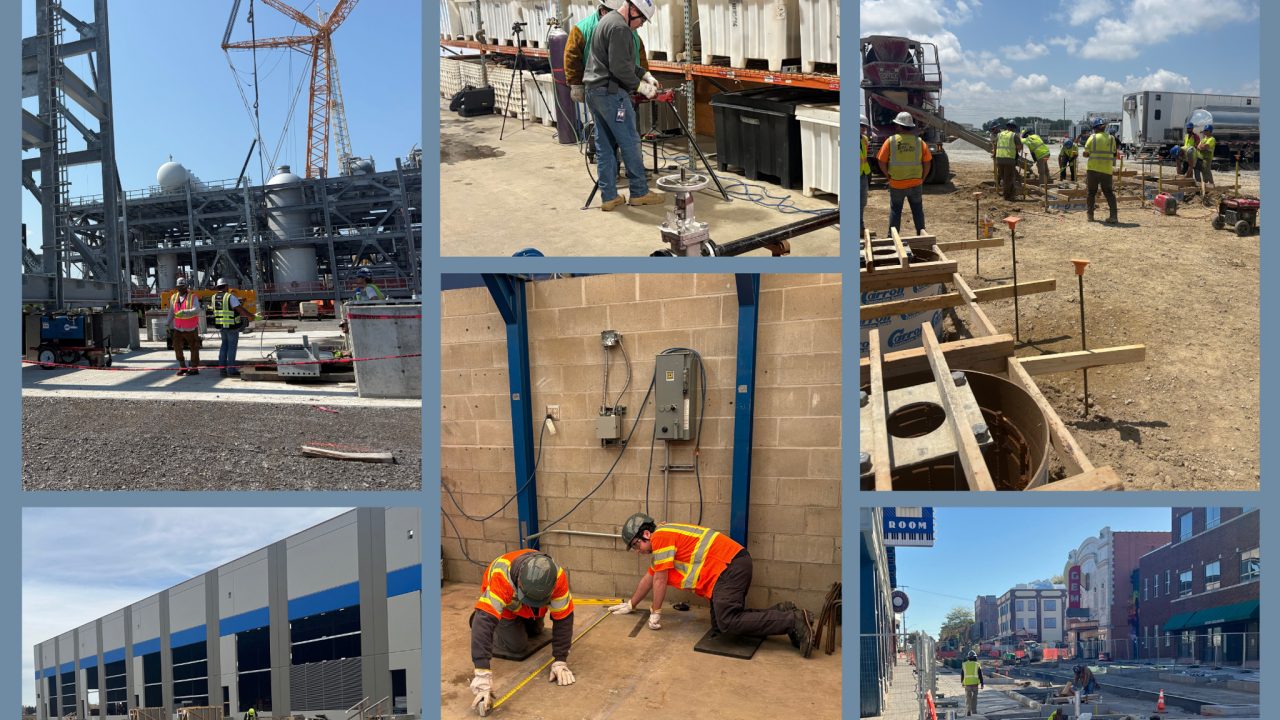
The construction industry in 2024 was defined by strong fundamentals, marked by a 10% increase in nominal value added and a 12% increase in gross output. Construction spending crossed $2 trillion and maintained a balanced trajectory in the first half of 2024. Despite facing a pervasive talent shortage, the sector’s employment level reached 8.3 million in July 2024, surpassing its previous peak of 7.7 million in 2006. That number has been increasing steadily for more than a year now.
Nevertheless, the industry had its fair share of challenges. High interest rates and price inflation continued to impact the residential and commercial segments. Moreover, the challenging lending market is expected to continue through the year, according to the AIA Consensus Construction Forecast.
Looking ahead to 2025, there are reasons to be optimistic. According to analysis in Deloitte’s 2025 Engineering and Construction Outlook, short-term interest rates are likely to continue to decrease gradually, and improving economic conditions could influence construction demand across various segments. Declining mortgage rates could boost demand and residential construction activity.
FAST FOUR
Deloitte’s 2025 outlook identifies four key areas that may help industry executives to capitalize on projected growth and tackle any unforeseen challenges.
1. Managing the labor mismatch. Deloitte analysis of data from Alphasense identifies labor attraction as a predominant issue for construction firms, affecting both skilled and unskilled positions. Challenges for engineering companies include rising demand for workers, evolving skillsets and forthcoming retirements. Demand is being driven by several trends, particularly ongoing construction and infrastructure projects that require specialized labor such as welders and electricians. Estimates suggest that the construction of a large data center typically creates nearly 1,700 local construction jobs over a period of 18 to 24 months.
In terms of skill sets, Deloitte’s analysis highlights 44% of the current skill requirements in infrastructure are expected to evolve over the next five years. Demand for digital skills alongside soft skills is rising as well. An aging workforce presents another issue, as the average age of craft workers will be 46 years old by 2030.
Engineering and construction firms will need to use a variety of strategies to build an agile workforce. The report highlights four strategies that firms could consider:
- Integrating AI-enabled automation and digital tools can augment workforce productivity by helping workers focus on high-value tasks. It could also help attract younger workers while aiding the retention of older workers by reducing physical strain and enhancing safety.
- Offering more opportunities for career growth and diversification to combat high turnover rates can encourage cross-skilling and internal mobility through job rotation and cross-training. Training tradespeople and technicians on a variety of tasks and developing diverse skillsets is becoming more common, driven by a desire for a more consistent work environment, higher wages and more challenging work.
- Recruiting from outside of the sector can help to tap into alternative sources of talent, such as employees transitioning from tech and other sectors.
Creating partnerships with academia and government can help create a steady talent pool by offering apprenticeships and work-study programs.
2. Increasing technological integration. Digital tools and technologies are being explored across the value chain to enhance productivity, streamline operations, bolster safety and improve the customer experience. Some firms are placing a new emphasis on scaling technology opportunities that range from the back office to project delivery and connected construction.
Emerging technologies are gaining traction within the sector and jobsites are becoming increasingly interconnected and data-heavy, making digitalization crucial in the industry.
Building information modeling has been around for decades but is growing in sophistication. BIM can be used to generate digital representations of buildings and projects, helping companies find synergies across operations. One mechanical and electrical construction company, for example, has improved their margins by more than doubling their BIM designers and by investing in prefabrications.
Digital twin technologies have allowed companies to focus on adding value through exploring their digital replicas, simulating and optimizing the construction process to make workflows smoother and differentiate themselves from the competition. One multinational infrastructure consulting firm is automating using digital twins and augmented reality to streamline processes and alleviate labor constraints.
Robotics and automation are increasingly gaining traction in engineering and construction firms. Some firms are incorporating robots to transport materials autonomously, perform precise welding, plan layouts and operate remotely in hazardous environments.
Beyond these, companies will likely invest in the next wave of transformative technologies such as augmented/virtual reality and generative AI.
3. Financial considerations. Engineering and construction companies are expected to focus on creating value and sustaining growth through strategic divestitures, refined capital allocation, cash-flow optimization and increased private equity investments in 2025. Large construction firms may optimize their portfolios by divesting non-core assets, cleaning up balance sheets and reinvesting in core business areas to enhance overall performance. Meanwhile, smaller firms may seek market share and revenue growth, potentially attracting interest from larger firms as well as private-equity investors, presenting new opportunities for expansion.
Mergers and acquisitions activity will likely be an important growth strategy for both large and small firms, as Deloitte’s analysis of major deals revealed that construction firms are integrating vertically as well as horizontally.
4. Public policy. Firms in the engineering and construction sector are likely to continue to remain agile in the face of the evolving policy landscape, closely following the macroeconomic situation and any policy shifts that could impact the sector, including federal investments. They will continue to follow trade policy developments and will likely align their operations to capitalize on any government incentives and policies in the coming years.
While the engineering and construction sector is not new to disruption and volatility, evolving economic and regulatory factors are expected to play a pivotal role in shaping the upcoming year. Deloitte’s outlook identifies the opportunities present for continued growth and factors to consider as firms carry out their plans for the year ahead.
SEE ALSO: DELOITTE REPORT SHARES THE ‘FUTURE OF CONSTRUCTION’