In recent years, the AEC industry has embraced a wave of digital transformation, with global investment in AEC technology skyrocketing to $50 billion in 2023—an 85% increase over the previous three years.
With thin margins and productivity challenges persisting—rework and siloed data continue to plague organizations, costing billions in delays and overruns—AEC organizations continue to look for ways to build faster, smarter and more collaboratively.
Enter the industrial metaverse—an immersive, data-rich, virtual environment that merges companies’ physical and digital worlds. Defined by its collaborative nature, constant connectivity and democratization, the metaverse is transforming how industries interact and innovate.
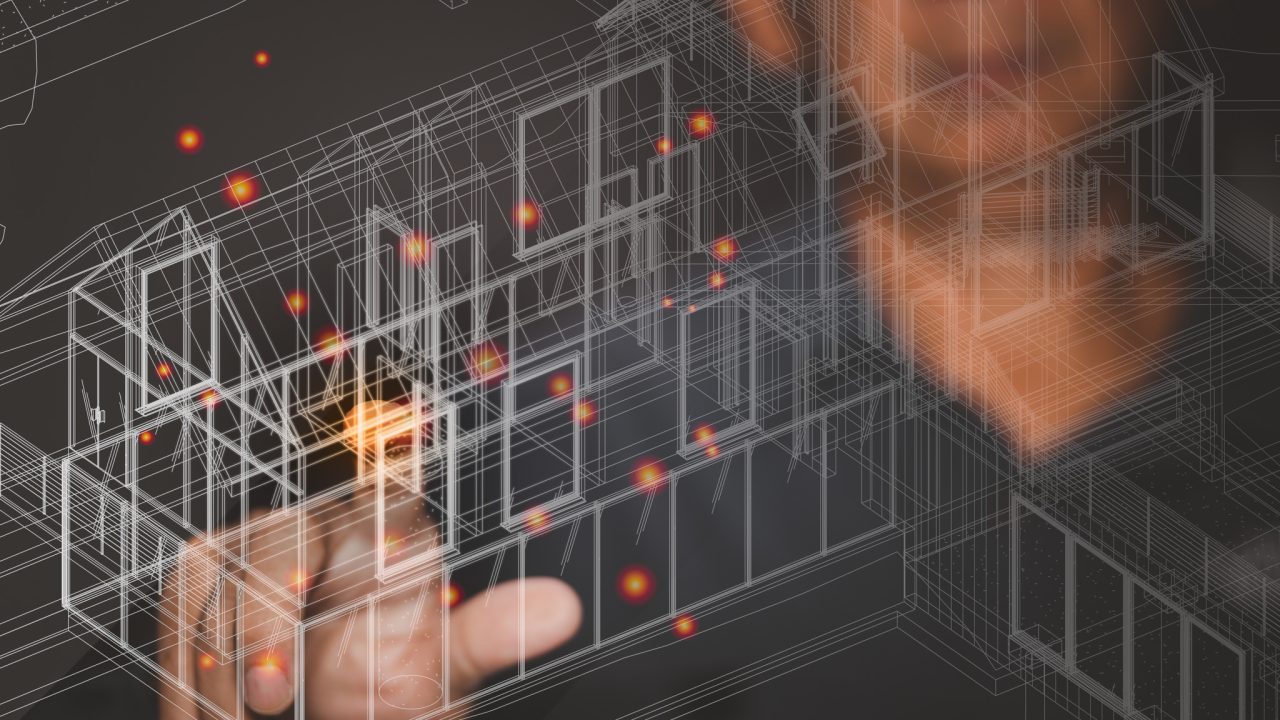
By blending reality capture, digital twins, IoT sensor data and extended reality into a unified experience, the industrial metaverse enables project stakeholders to collaborate in real time within a living digital version of their assets.
Teams can now walk through jobsites in virtual reality before ground is broken, overlay current as-built conditions onto design models and make decisions with the benefit of rich, up-to-the-minute data. The industrial metaverse promises to turn the sector’s biggest challenges into opportunities for efficiency, deeper insight and competitive advantage.
Persistent challenges impacting projects
Costly rework is a recurring drain on resources with studies showing that up to 30% of construction is rework. In fact, lack of efficiency can add an estimated 20–25% to project costs. For a $1-billion project, that’s $200–250 million wasted due to errors, delays and low productivity. Such overruns not only erode profit but can also damage client relationships.
Projects involve numerous stakeholders, from owners, architects and engineers to contractors, subcontractors and suppliers, yet tools and data often don’t connect with each other. According to research, nearly a quarter (24%) of construction software applications don’t integrate, leading to siloed information. Not to mention the cost of lost data when completed projects are handed over.
Around half of construction professionals still transfer data between systems manually, often using spreadsheets, hard disks or email, leading to version errors and delayed updates. As a result, critical project information that could be leveraged from BIM models, field scans and IoT sensors, for example, remains locked in silos, unused.
Two of the root causes of project write-downs are misunderstanding and miscommunication of the project scope. Poor collaboration causes uncertainty and missed deadlines, which in turn leads to budget overruns.
These challenges call for a new approach—one that allows companies to break down silos, connect teams in real time and get decisions right the first time. This is where the industrial metaverse comes into play.
Transforming AEC with the industrial metaverse
The industrial metaverse represents a convergence of technologies, tailored to solve businesses’ pain points. At its core, it is a virtual representation of the built environment—an interactive 3D virtual version of a project or facility, synchronized with real-time data. Stakeholders can immerse themselves in this shared space using VR headsets, AR devices or simply a web interface to experience and manipulate project information in ways traditional 2D plans or even 3D models on a screen cannot match.
Key industrial metaverse technologies include:
Digital Twins
The Digital Twin Consortium defines a digital twin as a synchronized virtual representation of a real-world facility, asset or process, organized and updated throughout the project lifecycle. Virtual models of physical assets, such as refineries, pipelines and grids, provide real-time insights and predictive analytics.
Artificial Intelligence
Algorithms that optimize production processes, forecast equipment failures and enhance decision-making.
XR, VR and AR
Extended reality enables more effective decision-making through the consumption of digital twins for training, planning projects and operations, remote inspections and real-time collaboration across different locations. Virtual reality allows teams to fully immerse themselves in their environments to better understand the current situation as well as future requirements. While augmented reality overlays contextual data and digital elements onto physical surroundings. These technologies are particularly useful for construction planning, remote collaboration and workforce training, allowing users to visualize future scenarios and improve operational efficiencies.
Internet of Things
Sensors and local data processing enabling real-time decision-making, minimizing latency and maximizing efficiency.
Robotics
Robotics, combined with digital twins and AI, optimize the operation of automated production systems.
Crucially, the industrial metaverse breaks down the old barriers between disparate software and teams. Instead of separate BIM files, laser scans, schedules and IoT dashboards, all data converges into a single, intuitive environment. An engineer, architect and contractor can meet inside the same virtual model—for example, reviewing a design by walking through an XR simulation of the building at full scale—each seeing the latest merged information. Changes or annotations made in this space update the source data for everyone, ensuring a single source of truth. In short, the industrial metaverse turns fragmented data into a cohesive, visually rich experience where insight is instant and collaboration is encouraged.
This is not just about visualization; it’s about driving actionable insights, reducing costs and improving operations. The industrial metaverse enables you to harness your data in real-time, creating smarter, more efficient workflows. By connecting real-time data to decision-makers in an immersive format, the industrial metaverse empowers firms to make better, quicker choices, catch problems before they escalate, and execute projects with more transparency and foresight.
Some of the ways the industrial metaverse is already transforming AEC workflows include:
Improved collaboration and communication
One of the most immediate benefits is radically improved team collaboration. Digital twins in the metaverse serve as a unified platform where all teams—from design through to operations—can access the same up-to-date project information. This single, shared environment eliminates the version conflicts and misunderstandings that arise when each stakeholder works in their own siloed tool. Instead, architects, engineers, contractors and owners can interact with a project’s digital twin together, whether they are in the same room or located remotely.
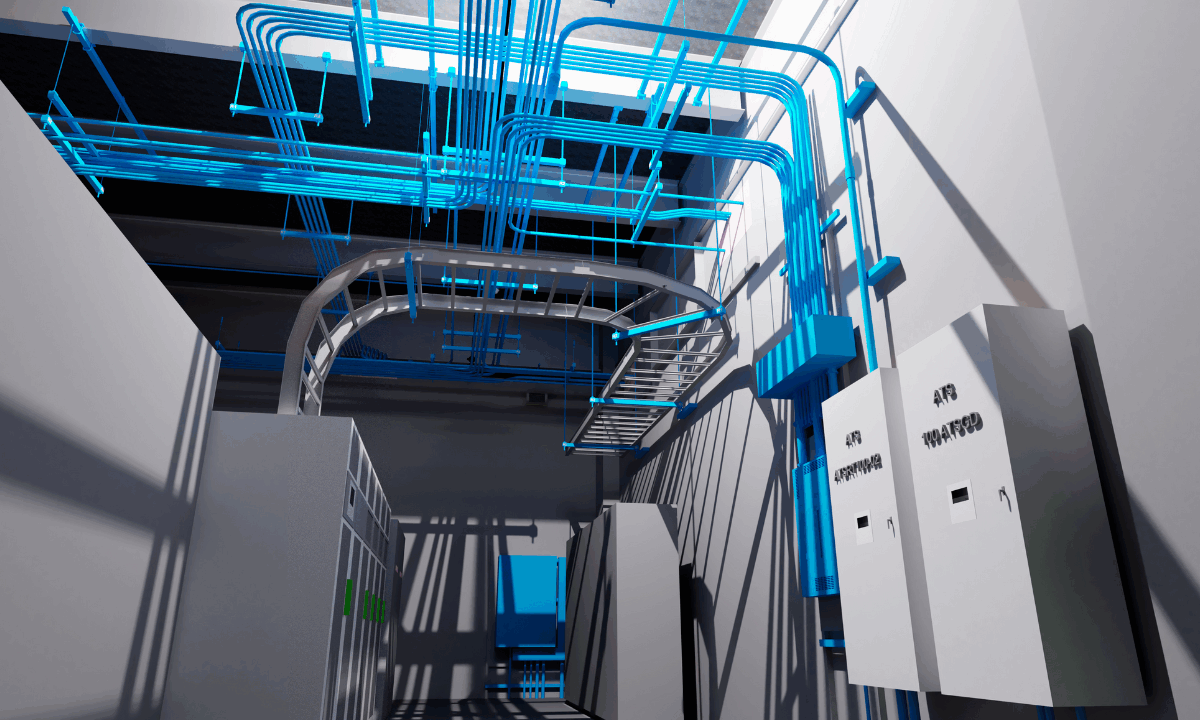
Issues that might have previously taken weeks of back-and-forth to resolve can now be addressed in a live collaborative session. For example, a clash between mechanical and structural elements spotted in an immersive coordination meeting can be marked up and assigned to the responsible party or even edited and resolved collaboratively on the spot. Everyone sees the context and agrees on the solution in real time. Such immersive collaboration is leading to faster consensus and fewer errors.
Ultimately, better team alignment means fewer costly mistakes in the field. Early adopters of XR-based design coordination have reported significant reductions in coordination time and rework, simply because all stakeholders are aligned.
Data-driven decision making
AEC projects generate massive amounts of data—from design analytics and simulation results to field sensor readings. Historically, much of this data was unused or looked at in isolation.
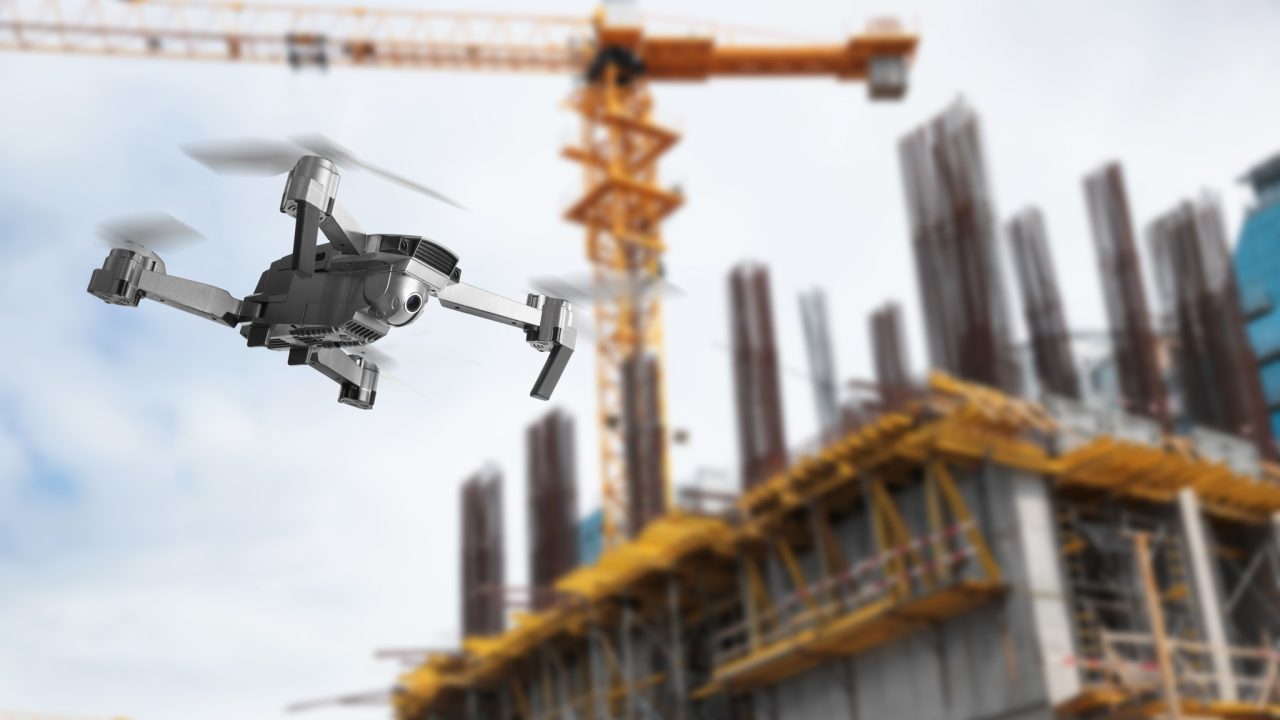
The industrial metaverse changes this by integrating and visualizing data in context, enabling truly data-driven decisions. When a project’s digital twin is fed with real-time inputs (like drone scans, photos, point clouds or IoT sensor data from a construction site), teams gain an unprecedented level of situational awareness. They can virtually see current as-built conditions versus the plan, spot spatial or time-based deviations or issues immediately and act on them. Decisions no longer rely on out-of-date information or assumptions; instead, backed by an up-to-date picture of reality.
Moreover, the metaverse environment allows what-if scenario planning with ease. Stakeholders can collaborate on simulations to test different approaches, flag risks early and agree on the best way to proceed. For instance, planners might simulate a crane lift or a complex concrete pour in the virtual model to evaluate safety and timing before doing it for real—avoiding hazards and optimizing the process. Design teams can iterate options and instantly see impacts on cost, schedule or carbon performance by toggling different materials or layouts in the digital twin.
This level of rapid, informed decision-making was not possible when data was trapped in offline PDFs and disconnected software. With a metaverse approach, every decision—from engineering changes to site logistics—can be driven by data and evidence instead of guesswork. The result is more confidence in decisions impacting budget, timeline, quality and, therefore, better outcomes.
Risk reduction and safety improvements
A major cause of project risk is discovering errors late in the process, such as a design clash or unforeseen site condition that halts operations. By using an integrated digital twin, teams are identifying issues earlier, in a virtual environment, when they are far cheaper and easier to fix. This proactive approach directly cuts down on expensive change orders and rework. It also keeps projects on schedule by removing roadblocks in advance.
Safety training and hazard prevention are also enhanced. VR simulations in the industrial metaverse allow workers to practice high-risk activities, like operating equipment or navigating a hazardous site, in a realistic, immersive setting but without real-world consequences.
This kind of immersive training can reduce onsite accidents by improving worker awareness and preparedness. Likewise, augmented reality can be used onsite to overlay hazard information or instructions on a worker’s field of view, preventing mistakes.
Empowering better planning, scenario testing and training, the industrial metaverse reduces project risk and helps ensure that when construction gets underway it is far more predictable and safer.
Sustainability and waste reduction
The AEC sector is a major contributor to greenhouse gas emissions and with half of the resources for construction and operations of facilities going to waste, the industrial metaverse should be welcomed as a catalyst for more sustainable and resilient construction.
During design and construction planning, teams can use the metaverse to virtually analyze a project’s environmental performance. This might include testing different design options to reduce material use or embed lower-carbon products, running energy models to maximize efficiency, or planning construction logistics to cut travel and idling time.
These simulations help teams make choices that reduce the project’s carbon footprint long before construction begins. Once construction is underway, the real-time tracking of materials and progress in the digital twin helps prevent over-ordering and wastage.
With precise insight into what is needed and when, teams can avoid the common practice of erring on the side of surplus (which often sends unused materials to landfill). Every element of the project is planned and optimized digitally to minimize physical waste and inefficiency.
Looking longer term, the digital twin used during a construction project doesn’t cease to exist at handover; it becomes a valuable asset for operating a building sustainably throughout its life. Owners can plug in building management systems and IoT sensors to the model, using the industrial metaverse to monitor energy use, track maintenance needs, and run scenarios for future retrofits or expansions. Thus, the metaverse approach supports sustainability from initial design all the way through to ongoing operations, helping stakeholders meet environmental targets while also saving money.
Overcoming hurdles to adoption
Implementing an industrial metaverse strategy is clearly a smart investment, but it does require foresight and commitment. One hurdle is the integration of new technologies into existing workflows. For example, many firms are experimenting with XR for the first time and discovering this requires new software, new hardware and staff training; not only capital expenditure but also a significant investment in time and resource. Embracing the industrial metaverse often entails upgrading IT infrastructure and upskilling the workforce.
A further challenge is breaking down the entrenched data silos and legacy systems within organizations. Migrating to a cloud-based, unified platform can be daunting for companies used to segregated tools and on-premise data. Interoperability is critical—the metaverse won’t deliver value if it can’t connect to your existing BIM models, project management software or IoT feeds.
Fortunately, the industry is moving quickly to address this. Open standards and APIs are making it easier to link systems. For example, new integrations now allow users to bring as-built laser-scan data from reality capture platforms directly into digital twin software workflows, creating a cloud-to-cloud link that smooths the digital transition for companies looking to leverage their existing data in the metaverse. Such advances mean that early technical friction is decreasing over time.
Act now, no matter the scale
The important takeaway for companies is that these hurdles are surmountable—and the ROI can be significant. The gap between physical and digital worlds is closing fast. To succeed, companies should start with targeted pilot projects—for instance, a VR coordination session on a current project or creating a digital twin for a high-value asset—to demonstrate quick wins and learn what works.
Establish a culture of innovation and continuous learning so that project teams embrace these new tools rather than resist them and insights from one department are shared with others to encourage faster and more efficient adoption.
While there is an upfront cost to building your organization’s industrial metaverse capabilities, the cost of inaction could be far higher if your competitors are leveraging these and you’re not.
Seizing the metaverse opportunity
The industrial metaverse is already delivering tangible improvements in how companies design, build, manage and operate across the sector. By tackling longstanding issues of inefficiency, poor collaboration, risk and sustainability, this new paradigm offers organizations a chance to significantly increase productivity and performance.
Executives across industries recognize the potential; a recent PwC survey showed 82% of business leaders expect metaverse technologies to be part of their processes within three years. Businesses across the sector can’t afford to sit on the sidelines as the metaverse gathers momentum.
The next generation of projects are being built twice—first prototyping digitally then physically to avoid costly rework of having to build twice in the field. As the saying goes, measure twice, cut once. Make sure you’re doing it right before you risk building incorrectly. Invest in industrial metaverse capabilities now to remain competitive tomorrow. This means allocating budget to pilot projects, forging partnerships with technology providers and training teams with the necessary digital skills.
Those that move early will shape best practice and position themselves as innovators while firms that delay risk falling behind more agile competitors who can deliver projects faster, safer, cheaper and greener by leveraging this immersive tech.
SEE ALSO: 2024 AND THE MULTIVERSE OF MARKETS